As students adjust to the new school year, teachers do as well. Alongside other NYC schools, Baruch has adjusted to two new curriculums: Illustrative Mathematics and Open Sci Ed.
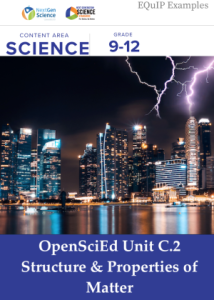
Prior to this shift, there was no definitive curriculum. Instead, the lessons taught varied by the district and the teachers textbook, with resources serving as a core curriculum. Beginning in the 2025 school year, Open Sci Ed has been introduced to New York State Science curriculums and focuses on students using problem solving skills, questions and models to understand the subject matter.
Unsurprisingly, Baruchians have mixed feelings about these curriculum changes.
10th and 11th-grade Chemistry teacher Ceren Kilic has been teaching Chemistry at Baruch from 2019-2020. She says, “I don’t hate [Open Sci Ed], but I also don’t love it because I think it is a very drastic change—so sudden.”4
Part of what has challenged Kilic is that the curriculum doesn’t always align with the specific needs of individual Baruch students.
“Sometimes some parts of the lessons may not necessarily work as the curriculum thinks it may work for the students. So that’s what I’m trying to work with the students with. I’m trying to adapt to students’ way of thinking as it’s something they’re not used to starting from this,” she said.
Despite the drastic and difficult changes, Kilic does appreciate that the students are at the center of the curriculum.
“I like that it is very student centered, so it puts students in the driver’s seat,” she said. “They are prompted to ask questions and wonder about the topic, that part I like. I also like the student to student discourse, which is happening much more often.”
Though, Baruchians have had plenty to say about this curriculum change as well.
Hazel Foley, a junior, said that she’s been struggling with the changes. “I’ve always been a fan of science. I want to go into science, but I can’t say I’ve been a fan of the curriculum,” she said.
Foley shares her ideas of the curriculum’s benefits and drawbacks.
“I think the idea is that you learn how to become a critical thinker and learn chemistry concepts along the way. Although I do think there is a place for that and it’s important to learn critical thinking, I don’t think it does a very good job at that or teaching us chemistry in general.”
In spite of this, Foley believes that the curriculum gives students the opportunity to, in her words, “Learn how to become a critical thinker and learn chemistry concepts along the way,”
“It’s sometimes better than just memorizing since there are skills that you’ll actually take away.”

While Chemistry teachers and students overcome this challenge, so do Mathematics students and teachers. Math, like Chemistry, did not have a definitive curriculum and followed textbooks and regent requirements. Beginning in the 2025 school year, Illustrative Math has paved its way into Geometry classrooms.
Ninth and 10th-grade Geometry teacher, Amanda Benowitz says, “All of Manhattan is changing their curriculum to Illustrative Math so they started here with Algebra One and this year they are continuing to do this but with geometry and next year with Algebra Two.”
“The concept of it is what we do already, very much like asking for student examples first and giving you a couple of minutes to try then go over it as a whole class.”
Benowitz enjoys the changes Illustrative Math has introduced to the classroom, such as the growing desire to engage with the lessons.
“They’re just emphasizing it more in this curriculum, and I agree with their thought process on it. If you give a student an example, whether they know it or not, it sparks some kind of curiosity where they are motivated to know how to do it,” she said.
As the school year progresses, teachers aim to create a comfortable environment to help ease students into a new learning style, in hopes that the new curriculum change will encourage creative and critical thinking in students. Overall, this change in Baruch represents the attempt to improve learning and teaching styles, setting students up for stronger success in the future.