

It’s been eight months since the Yondr pouch initiative began at schools across New York State. The morning ritual is now muscle memory: walk in, tap CASS ID, click the magnetic lock, and drop a dead device in the Yondr pouch. But as the initial groans of “phone-withdrawal” have faded into a dull hum, a more complex question has emerged in its wake. Are you better off?
In a recent poll conducted on the official 411 Press Instagram account, a staggering 62% of students voted “No” when asked if the new system worked. However, 15% voted “Yes” and 23% remained unsure. While this data does not include the entire student body nor staff, it does incite debate. Although over half of the poll participants voted no when prompted, that sentiment does not seem to reflect the overall boost in morale I have observed over the past few months.
Return to Analog:

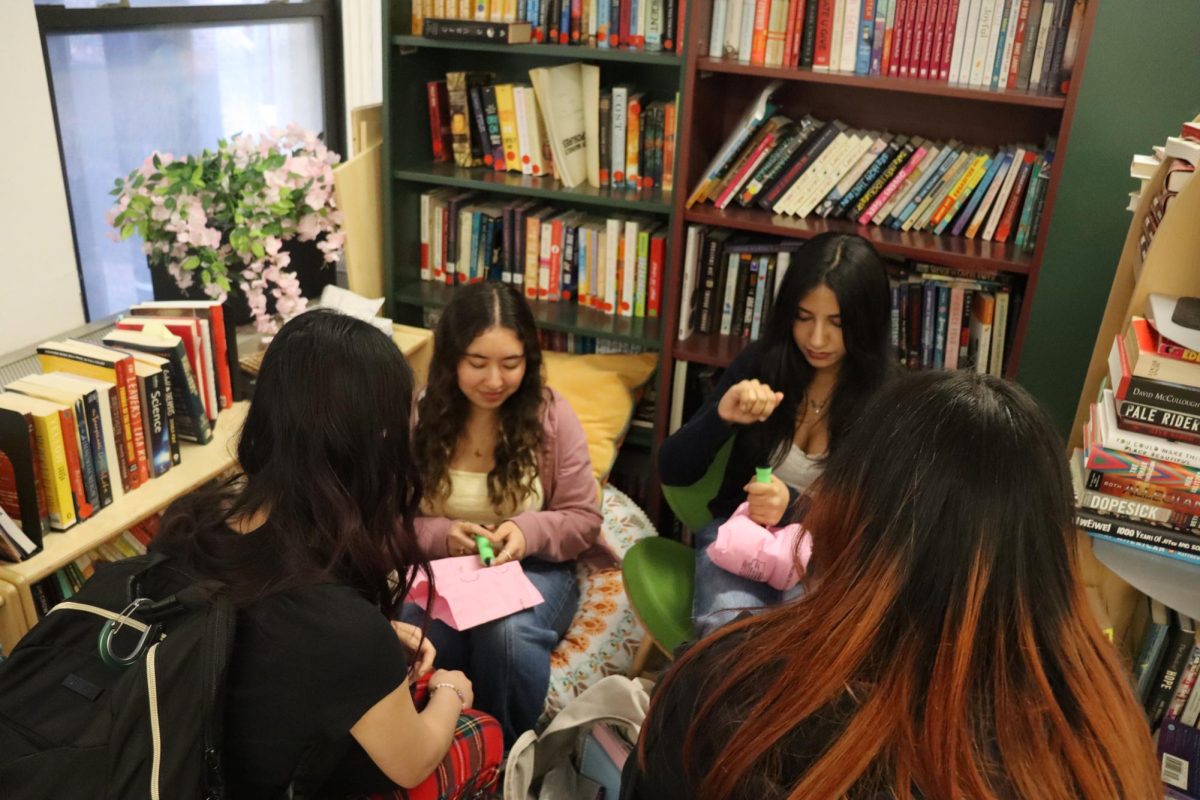
Students are now picking up hacky sacks, playing cards and sharing word search puzzles. While at first this shift felt like a fit of nostalgia, it soon became the new normal. Without phones, students are presented with a rather rare opportunity to engage with each other in real life.
Senior Nathalee Chimbay reflected on how the Yondr system changed the way she spends her free periods.
“I feel like I am better off in a way because I’m talking to way more people than usual, but it still feels weird not talking it out whenever I have free time and having to go down the lobby to unlock it.”said Chimbay.
One of the activities Chimbay has returned to is word search puzzles, “I always did them as a kid with my uncle, and recently started getting back into it by finding random books in the teacher’s room. It’s fun to find the words and really makes you think where it could be if it’s vertical, horizontal, or even backwards.” said Chimbay.
Card games have also become pretty popular around school as during a free moment students can easily pull out a deck of cards and gather into large groups. Senior Ryan Xiao believes the absence of phones has strengthened connections between students.
“I think we are able to engage with one another more as opposed to everyone just doing their own thing. Social interactions are very important to build community,
and Baurch does this very well because we are such a small school, but with the added bonus of no phones, we are even more interconnected.” said Xiao.
Though for Xiao, card games also carry a personal meaning, he says, “Card games are generally very fun, and they are universal. I play with my grandma, and I wanted to bring a part of my culture to school. I’ve noticed my friends have enjoyed the games and grown into them as well, so it’s become a staple for us.”
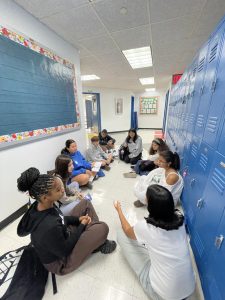
Meanwhile, senior and hacky sack enthusiast Julian Avellaneda says activities like hacky sack have become an outlet for students adjusting to life without constant access to their devices.
“I think we are better off without our phones because without them, people communicate more. I don’t care either way, but I think other people are opening up and actually interacting with each other.” said Avellaneda.
Avellaneda explained that the physical nature of hackeysack is part of what makes it so appealing and exciting.
“I love playing hacky sack because it promotes teamwork, and it’s something you can do on the go. It’s way better than just getting stimulated by your phone–I think the physicality of it is what makes it more popular. Without our phones, we are a bit antsy, but a hacky sack gives us an outlet.” said Avellaneda.
While students are finding their own ways to adapt, the administration sees these hackeysack circles and card games as a direct result of their policy goals.
The Teacher View:
While students focus on the social shift, faculty members are observing a change in “brain work.” Science teacher Angela Oldenburg believes the ban has made for “fruitful” discussions, even if it meant sacrificing tech-based tools like Kahoots.
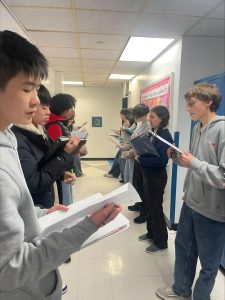
“I think in a nutshell, it’s easier to teach because there are less distractions,” Oldenburg said. “For science, the curriculum is a lot more heavy on scientific literacy… You have to read something, look at data before you have your response. I think using technology can help those skills, but I think those skills need to come from you first.”
Oldenburg also highlighted the importance of critical thought in the age of AI. “We have to be smart to know how to use technology to our advantage, but before you can do that, you have to think for yourself first.”
A Policy of Empowerment or Policing?
Despite the general consensus of benefits, Baruch’s administration acknowledges that the method—the pouch itself—is a point of contention. Assistant Principal Diana DiRico admits the situation is complicated.
“ It’s complicated—I absolutely think we are better off with a cellphone ban… the presence of cellphones in academic environments has long been causing distractions,” DiRico said. “However, the Yondr pouch itself is not necessarily the best mechanism. It is a semi-flawed plan; It would be nice if we could allow young adults to have access to their phones to use responsibly during their free time.”
DiRico noted that while she loves seeing the cafeteria become “chattier” and her board
games being used more, she understands the plight of the student body. “I never want
students to feel like school is policing them because the goal is to always empower them—and Yondr pouches happen to be a bit of both.”
Striking a Balance:
As the school year nears its end, the debate continues. Is the “authentic connection” DiRico describes tangible whilst also maintaining digital autonomy? For now, the “No” votes on Instagram suggest students aren’t totally sold, but the lively circles of card games and conversations in the hallways suggest that, socially at least, the “buzz” of Baruch has never been louder.
“I look forward to [phones] not dominating so much of our attention,” DiRico concluded. “Can we strike a balance?”







Amelia Bose • May 30, 2026 at 9:44 pm
I agree with this. There are many benefits to the phone policy but they do not teach us to effectively exist in a world with phones. They create a curated environment where we are forced to be present but what does that teach us about the real world where there are no such rules?