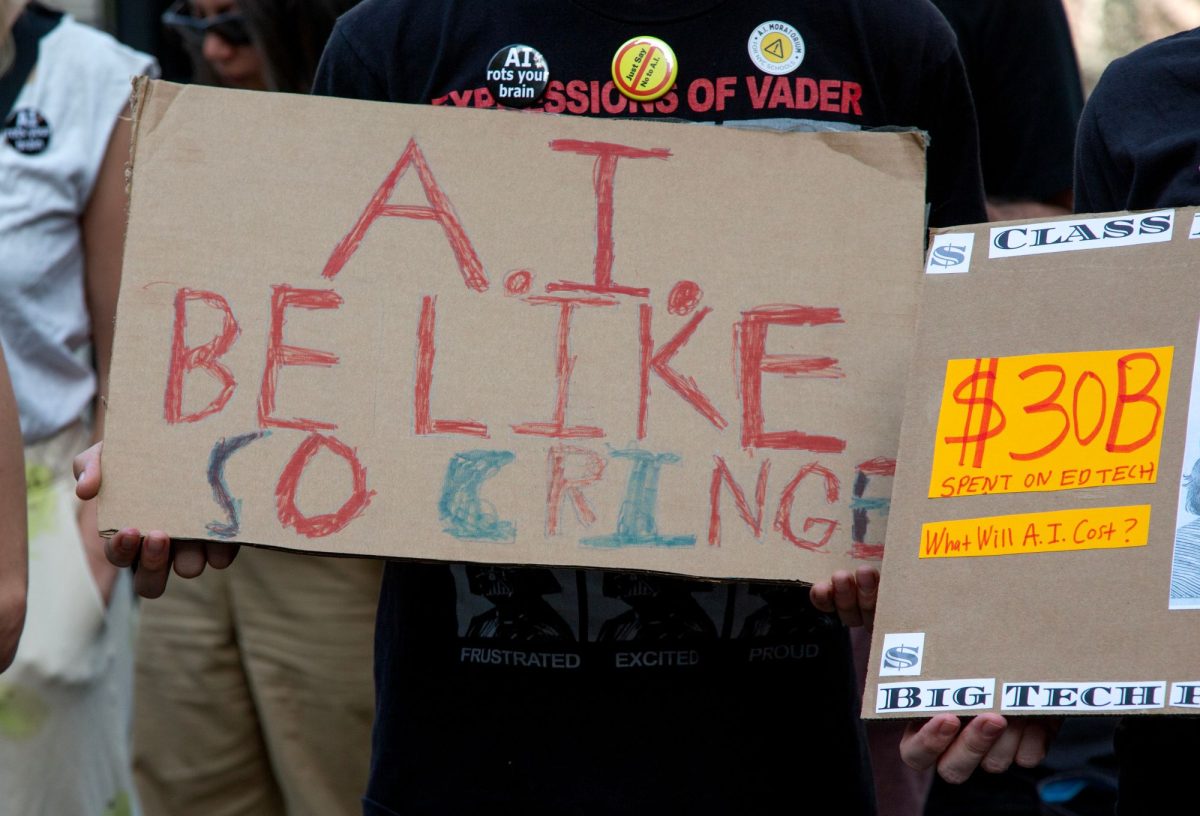
As New York City schools adjust to life after the cell phone ban, a growing organization of parents, educators and advocates against AI are asking officials to take another major step: pause the use of artificial intelligence in classrooms.
Kelly Clancy, an editor, parent and grassroots organizer, is leading a push for a two-year moratorium on AI in public education. In an open letter to school leadership, Clancy’s organization argues that school districts are rushing to integrate AI tools without understanding their long-term cognitive impacts—effectively repeating the exact mistakes made with smartphones a decade ago.
“We knew 10 years ago that cell phones were really bad for attention,” Clancy said. “And we did nothing about it.” The petition urges officials to temporarily halt the integration of AI in classrooms while researchers, educators and policymakers evaluate its impact on learning, privacy, mental health and child development.
Clancy continued, “There was a whole decade of kids who had phones… and there was never any sort of central message. We know that there were really terrible impacts.” She points to research indicating that the constant distraction of screens has actively hindered cognitive development across an entire generation. While the recent phone bans have been a massive success—restoring social interaction and classroom participation—advocates worry that districts are undermining this victory by pushing one-to-one laptops and AI tools into every lesson plan.
The Cognitive Harms
The argument for a two-year pause on AI isn’t just about screen time; it’s about how fundamentally different adolescent brains can develop when focused on screens. While AI tools may be helpful shortcuts for adults who already know how to think critically—a process called cognitive offloading—Clancy warns that for students, the technology poses a deeper threat: cognitive stunting.
Clancy explains, “[Cognitive stunting] means that you never develop those neuro pathways to begin with. There’s also a lot of research talking about how it’s leading to the cognitive flat lining, the lack of diversity in terms of thought and it’s streamlining the types of language that’s used.”
For student writers, this “flattening” of language is alarming. Beyond the academic shifts, advocates are raising flags about severe mental health risks, data privacy concerns and the rise of cyberbullying and deepfake harassment tied to AI tools in schools.
Clancy points to a real-world example of an adolescent who died of a drug overdose, whose ChatGPT logs revealed a tragic truth: the student would alternate between asking for math homework help, seeking relationship advice and asking how high he could get on specific substances.
Without human interference, these platforms can quickly become a buffer rather than a tool for genuine support.
Clancy continued, “A two year moratorium would allow us to figure out where AI is, because right now we have no idea–there’s no list–it would allow us to figure out what we want and what our goal is in terms of a public education system that prepares kids to live in the world. And it would help us make sure that we’re not making the same mistakes that we did allowing phones in the school.”
Furthermore, there are data privacy risks also at hand. Large scale tech corporations rely heavily on data mining to train and refine their models to feed back to students and therefore turning student work and interactions into corporate property.
“Tech bros’ incentives align with enriching their shareholders,” Clancy said. “What they want is to create a generation of kids who are hooked and addicted to their products, and they want to mine your data. Those two things are not commensurate with the goal of public education.”
The Double Standard: AI in Grading and Lesson Planning
One of the most contentious aspects of the current AI system in schools is the transactional environment it creates between educators and students. While students face strict consequences or accusations of cheating by utilizing AI, a growing number of teachers are turning to the very same technology to generate lesson plans, worksheets, and even provide feedback on student work.
Clancy calls the reliance on AI grading software “educator malpractice,” arguing that it dismantles the very foundation of the learning process.
“The world doesn’t need 50 more essays on Macbeth,” Clancy said. “What the world needs is 50 more humans that have written essays on Macbeth and thought about that process. The only way we can make that process worthwhile is if we entrust educators to evaluate it.”
According to Clancy, automated grading programs reduce nuanced writing to baseless, superficial feedback.For students, the argument is simple: if they are putting in actual human effort into their assignments, they have a contractual right to demand that their work be read and analyzed by a human.
Keeping the “Human” in Public Education
A common defense for AI adoption in schools is the pressure to make students prepare for a future that is dominated by advanced technology and AI.
However, Clancy points out a stark contradiction among the technology’s founders, There’s a Wall Street Journal article where they asked all of these AI executives how they’re educating their kids in the age of AI, and not a single one of them said that they were having their kids learn how to use AI.”
Clancy continued, “The people who want to make money off of you using AI—they’re not doing that for their kids. I believe in investing in a system where I would be happy if my kids went to any school. I want to build something that’s for all kids, not just for my kids.”
As the job market shifts, the exact skills that cannot be mechanized such as deep analysis, original writing and empathetic human connection are proving to be the most resilient. Clancy notes that while technical fields like computer science are facing intense job market corrections, fields that require human thought and analysis remain vital.
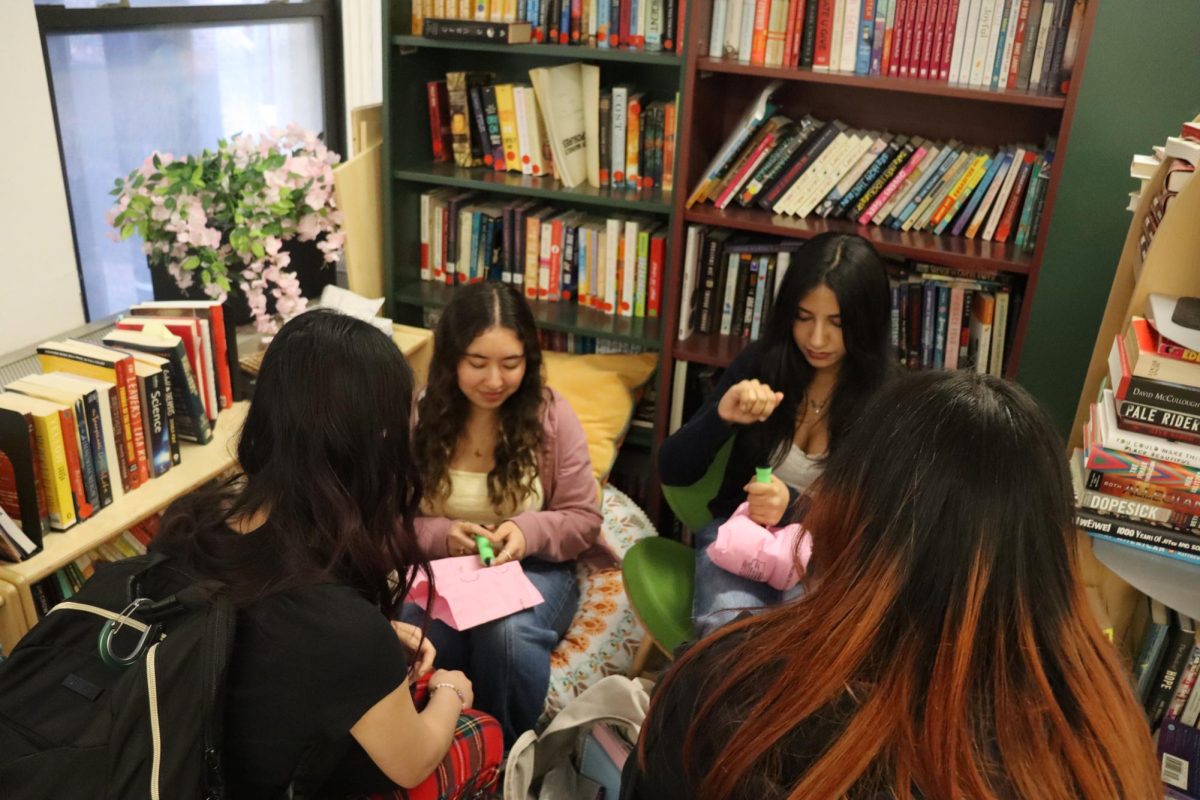
Ironically, the pushback against over-digitization is increasingly coming from students themselves. While the initial reaction to cellphone bans and Yondr pouches was met with frustration, the reality on the ground has shifted. Without the constant anxiety of what students can be described as a self-imposed surveillance state, where any minor mistake might be recorded and uploaded to various social media platforms, classrooms and lunchrooms have naturally become more lively and collaborative.
Ultimately, the call for an AI moratorium is an effort to protect, strengthen and ensure the longevity of human connection. While technology can optimize tasks, students ultimately thrive on structure, routine and real relationships built with educators—not with algorithms.