

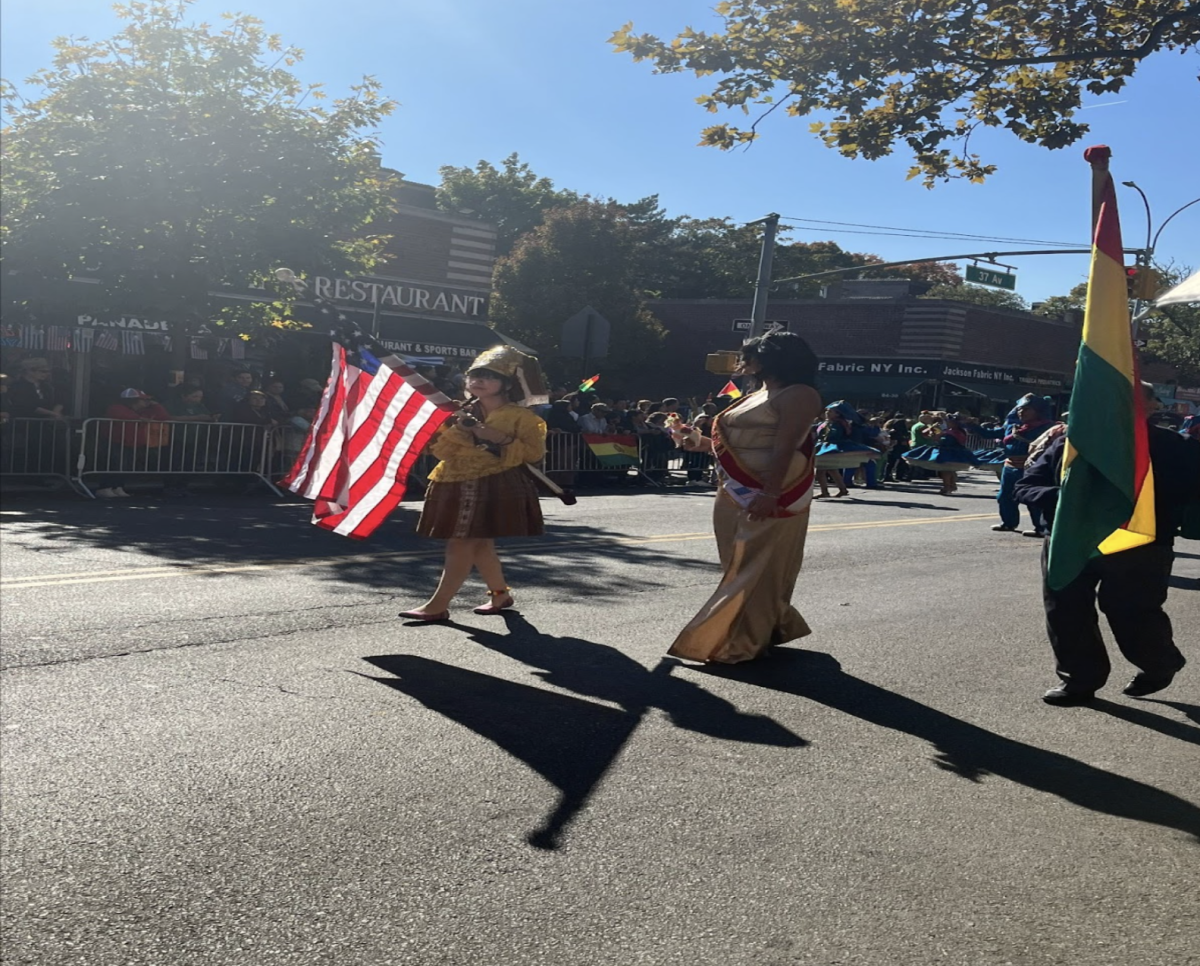
People will come from all over different places to watch the thanksgiving parade every thanksgiving. Over 34.3 million people turn on to watch the parade and over 3 and half million spectators watch in person. The colors, the people, the music, the dances and the festivity in the air is what attracts people to come to these parades in the first place.
Parades in New York City do a good job in bringing a sense of communities together. The city, which is one of the most diverse places in the world, creates a space where people from different backgrounds and communities can celebrate and connect and learn from each other.
While the thanksgiving parade draws millions of people from all over, many other types of parades in New York City don’t receive the attention nor appreciation as much.
Here at Baruch we have students involved in different types of parades reflecting a part of their identity and help build a sense of community. In NYC, parades let them express themselves, either their country, culture, holidays, religions and even about gender identity.
Ankit Ojha, a junior participates in the Nepali parade. With a group of students they rehearse traditional cultural Nepali dances to Nepali songs. Through parades it allowed him to be “closer to [his] culture.” said Ojha.
Through parades and finding that sense of community, you’re able to find that peace and space of your belonging and even who you are without having to hide or be afraid. “There are some people that are afraid to, kind of accept their culture and think their like culture is weird, but the parade especially, gives them specific powers just to say, That’s my culture, right there gives them pride,” said Ojha.
Shivaaya Ramdial, a junior also participates in parades. Ramdial participates in the Diwali parade, a religious parade located in Queens, NYC. Ramdial reveals that through the parade she’s also able to be real with herself. Being a part of the parade is a big honor in their culture, she’s able to make sense of things through it.
Parades emphasize someone’s true identity. “It brings people closer together, because it really demonstrates who we are and emphasizes what we do, and our role in society,” said Ramdial.
Nicholette Lopez, a senior here at Baruch participates in the Filipino parade as a beauty pageant contestant. She expressed that despite the parade mostly being from her community, it allowed them to come together and share that moment despite being within the same culture. “Everyone was within the same community, but everyone was from different places. I think in some way it did bring a great connection with people from all over.”
Through the experiences of these students, whether from the Nepali parade, Diwali parade and Filipino parade, each had felt a pride and belonging through participation in parades and having such a supportive community.
This sense of community expands more than just the students here at Baruch. Malu Viruez, a Bolivian dancer and former parade leader who has danced for a long period of time, participated in many types of parades like the Hispanic Parade.
Parades, it’s a sense of community. People from different regions, different parts and different countries. They know certain parades are coming up so they want to see the color, the dances, the communities—especially in New York,” said Viruez. Just being in NYC, a place where everybody comes and hopes to make it here, Viruez able to reveal her identity to others and also show appreciation for other cultures as well.
The sense of community felt by all these participants in parades aren’t also just felt through them but also the bystanders. Taniyah Jackson, a junior, coincidentally bumped into a parade and saw and felt much more than she had expected.
“It was unexpected, but, it made me meet people that I never would have met or see cultures I never would have been exposed to had it not been for that parade taking place to” By the people and the culture expressed from the parades, Jackson was unexpectedly moved by this and appreciated it.
This cultural connection is also seen in how performers are also supported by other communities.
“The Dominican parade. I stopped by. I talked to some of these people. They had very high energy, and they’re willing to tell me everything they know about their culture. So all these parades and all this culture, they’re very welcoming.” stated by Ankit Ojha.
“In our group specifically, we had someone that made signs. So they would, we would write down Bolivia supports, Dominican Republic, or say a statement about another country, and whenever we would pass by, and people would see the sign, they would get really excited and start screaming and cheering for us,” said Viruez.
This shows how parades bring different communities together with support and excitement and even through a common interest of cultural pride. Through parades it created meaningful connections between people of different backgrounds.
“In New York, you realize there’s so many different cultures and countries that kind of come together to share something so exciting and fun.”
Rosa • Apr 24, 2026 at 1:55 pm
Wonderful feature! Great job, thanks for sharing