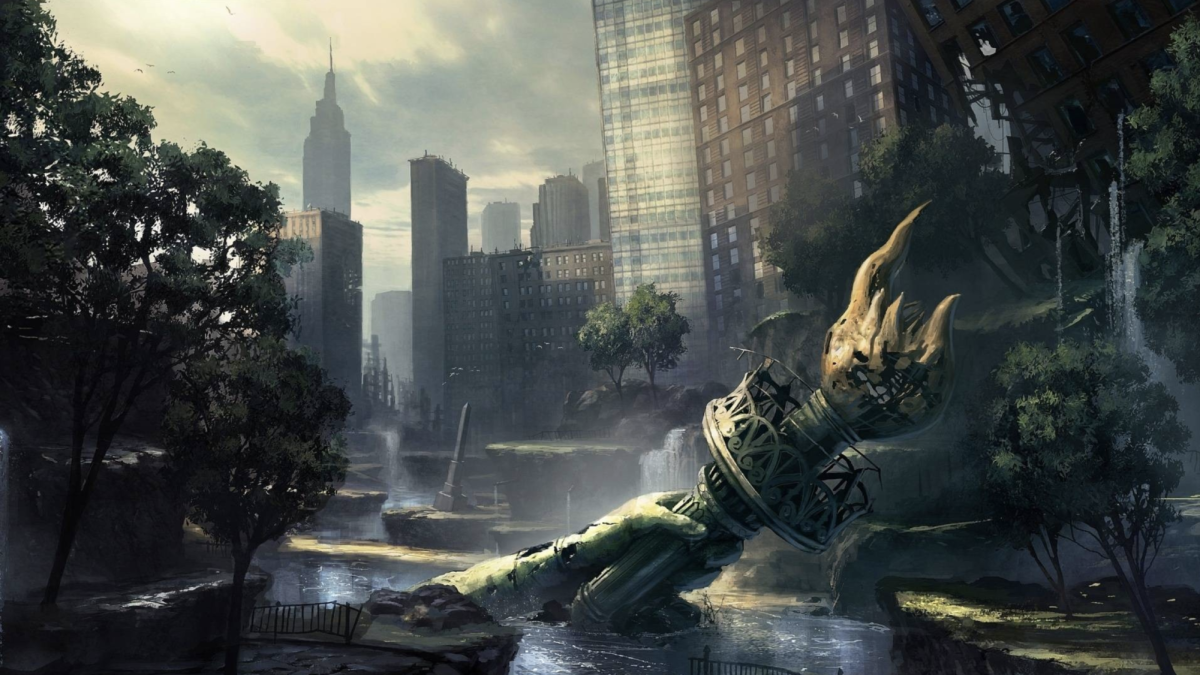
From “1984” to “The Hunger Games”, dystopian stories have become a popular form of entertainment amongst Gen Z. Whether it’s movies, books, tv shows, or social media, young people are drawn to a relatively narrow set of themes such as social division, surveillance, corrupt governments, and societal collapse. But why?
For many adolescents today, dystopian fiction no longer feels completely fictional–it’s getting real.
Unlike earlier generations, Gen Z has grown up in a world surrounded by many global crises: climate change, economic instability, school shootings, wars, political division, censorship, surveillance and the effects from the COVID 19 Pandemic. As a result, many teens feel connected with stories that reflect real life conflicts. 
English teacher John Downes-Angus believes that dystopian fiction attracts readers because it forces them to think critically about the world around them. “I think that it’s fun to read fiction—a story—that does what reading history can also do, which is make an argument about the world,” Downes-Angus said. “Sometimes fiction sets out to try to convince me of something, or to try to get me to think about something, and I like that experience.”
For Downes-Angus, dystopian stories are more than forms of entertainment. They are tools for discussion and reflection. He explained that books like “Animal Farm” and “1984″ encourage different types of conversations that people don’t usually have in their day to day life.
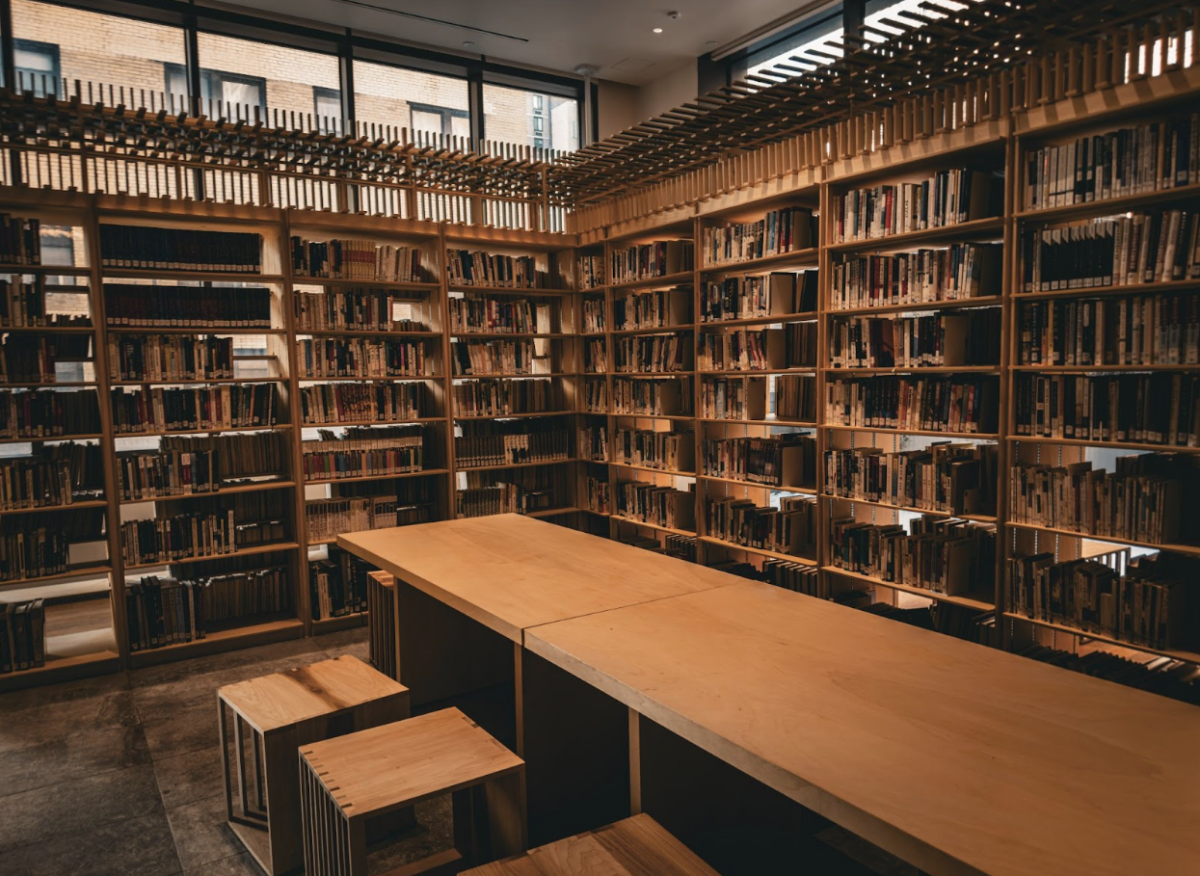
“There’s just not a lot of places where we can have these kinds of conversations…There’s space in a classroom to have conversations that don’t really fit anywhere else…So having a designated place in our city—which is the English classroom—can be a good way for us to have these conversations,” said Downes- Angus
Many Gen Z adolescents may feel connected to dystopian themes because dystopia mirrors parts of our modern society. Social media tracks users constantly via algorithms which collect personal information. Politics dominate the news. All these pressures make the future seem uncertain for our generation, we don’t know what to expect.
Lina Nouari, a junior, explains that while dystopian books can sometimes be difficult to follow, dystopian movies and shows feel exciting and familiar. “They all somewhat relate to what’s going on,” Nouari said. “There’s a lot of real world elements to these shows and movies, so you can understand why this is happening or how this could happen.”
Nouari mentioned watching dystopian entertainment such as “What Happened to Monday”, “Bird Box”, “The Platform”, “Maze Runner”, “The 100” and “The Hunger Games”. She explained how it creates suspense and different emotions for the audience.
“It gives me this thrill,” Nouari said. “You’re really interested, like, ‘What is going to happen next?”
Another dystopian film that strongly connects with the audience is “Leave the World Behind.” This movie focuses on a mysterious technological collapse that cuts off people from communication, transportation and information. What makes this film unsettling for Gen Z is how realistic it feels.
The movie doesn’t rely on fantasy elements or unrealistic worlds, it shows how dependent their society has become on technology. The loss of it creates panic and division, something that many young people recognize today.
Popular dystopian stories often reflect different themes. “What Happened to Monday” explores the government’s control over population growth. Nouari connected the movie’s themes to real-world concerns about the government and its control.
“Seeing that a lot of these dystopian worlds are coming to reality is making me worry how far these dystopian worlds can really become,” she said.
Katie Caba, junior, explained how dystopian stories can be appealing to the audience for different reasons. While some readers enjoy them simply for entertainment, others look and feel the deeper political and social messages behind them.
“I choose dystopian themes for a mix of both entertainment and to learn more about corruption in our government and the different ways it can go over our heads without realizing,” Caba said. “They have well-written messages within the books, and I think there’s a lot of depth to them.”
Many well known dystopian stories often reflect fears that already exist in society. In “The Hunger Games”, children from ages 12-18 are forced to fight to the death for entertainment while the wealthy watch from a distance and only see them as characters on a screen.
Earlier this year, President Trump announced a Patriots Games where one boy and girl from each state will compete against each other during a four day athletic competition as it is the US 250th anniversary. Many people have connected this to the Hunger games because of the dystopian-like selection process. “The Purge” portrays a society where the government of the NFFA
legalizes crime for a 12 hour time period at night each year, exposing class inequality and violence for their own economic gain and covering it up with a psychological meaning. These fictional “worlds” exaggerate real-world issues but also make the audience think about how far society could go.
“Fictional Teen Dystopias Reflect Real Capitalist Nightmares” by Eileen Jones was published by the political magazine “Jacobin”. Jones argues that many young people already feel trapped within systems that prioritize profit and power. “We live in a modern society that sacrifices everything, most heartbreakingly children, to the brutal workings of the free market,” she explained. Jones also describes schools and workplaces as a system that “chew them up as we’ve chewed up ourselves.”
The article explains how dystopian entertainment reflects people’s interest with violence and competition like seen in “The Hunger Games” and “Divergent”.
“At the end of a long day, we can relax while watching the entertainment version of this story. And in many films and shows, the public watching such deadly contests is typically an important part of the plot. It’s quite a hall of mirrors,” Jones said.
Even though there are many opinions behind dystopia, Downes-Angus believes it serves a purpose, “I think dystopia as a form of art is a reminder that the most important thing is to think and then talk about it,” he said.
This may explain why Gen Z continues to gravitate towards dystopian stories. They give them a way to process fears about the future, reflect and question about the systems around them, and imagine what life would be like if society stops paying attention to what happens around them. For a generation growing up in uncertain times, dystopia feels more like a reflection of the world around them.
As “The Hunger Games” character Effie Trinket said, “May the odds be ever in your favor.”