2,500 years ago, the Greek philosopher Sophocles published a range of dramatized plays adopting themes of misfortunes, mortality and divine interventions—or otherwise known as the Greek tragedies. Amongst his plays, millions of people to this day continue to read Oedipus: a story in which Oedipus is prophesied to unknowingly marry his mother and kill his father.
This play received plenty of praise for its ludicrous, incestuous plot as well as recognition for the lesson that Sophocles teaches: to always seek the truth, regardless of the consequences. As a result, the award-winning English playwright, Robert Icke, decided to rewrite this classic play into a Broadway production where it takes place in the modern era.
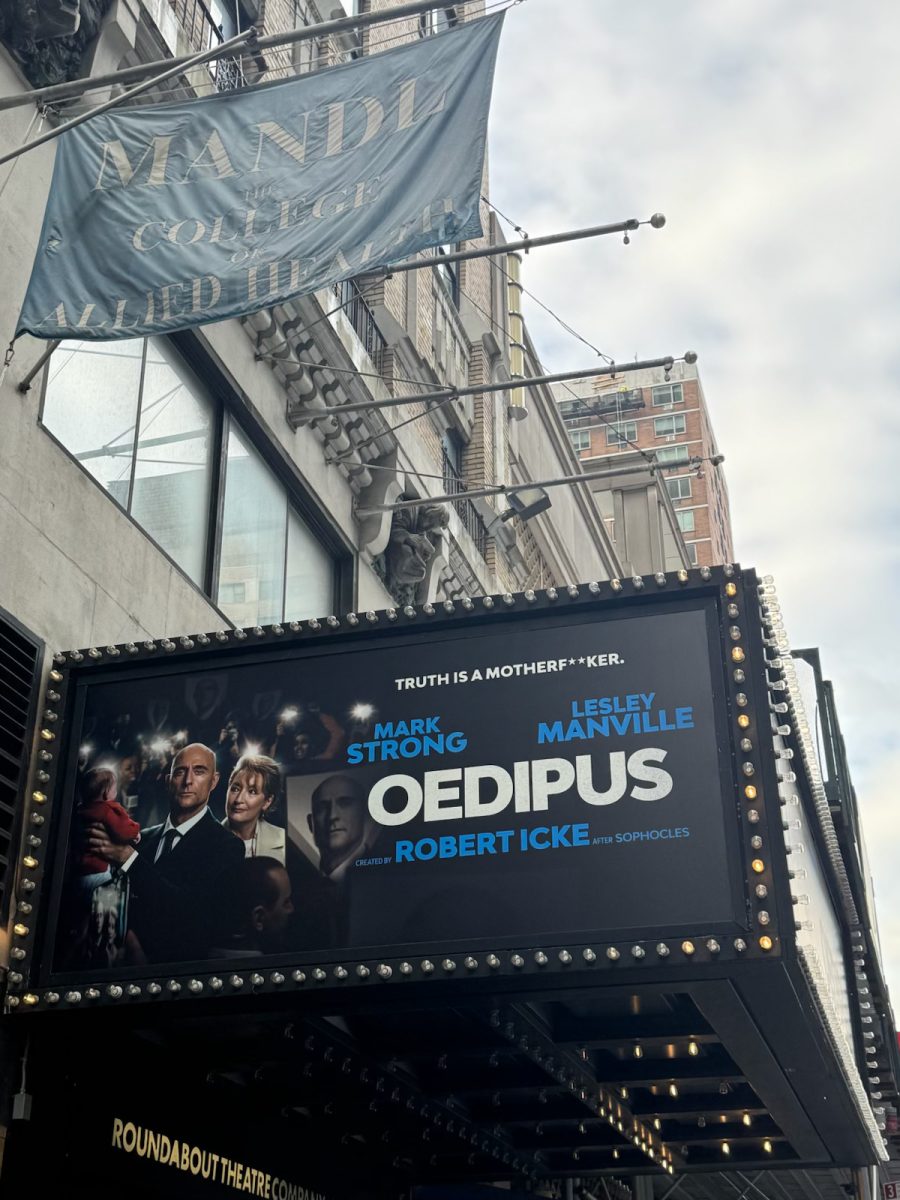
On Wednesday, December 18th, both of Mr. DA’s 12th grade AP Literature classes took a trip to Studio 54 to see Icke’s adaptation of Oedipus on stage. The show sparked differing opinions amongst the 411 Press editorial board whether or not Icke’s adaptation did the story justice.
Editor-In-Chief, Christina Katzen
It was a pleasure to have the opportunity to view the Broadway adaptation of Oedipus as it was clear there was a lot of forethought and care put into this adaptation. I enjoyed the contemporary setting of a concluding political campaign as it has relevance to our climate today and makes the confusing jargon of the original play much more accessible to young audiences.
I noticed very unique details—even Easter eggs—that alluded to the underlying themes of Oedipus. It is an innately uncomfortable play as it features incest, violence, and sensuality. I found one scene in particular between Antigone and her uncle, Creon, to silently point out the play’s uncomfortable nature. It was a brief moment between Antigone and Creon where he ‘compliments’ her outfit in a manner that had very odd and semi-incestuous undertones. This small detail in an otherwise unsuspecting scene points out the inappropriate nature and function of the family that seeps into every relationship–not just Oedipus and Jocasta. I appreciated this scene for adding a layer of nuance and complexity to both characters. In particular it added a new understanding for Antigone’s motivations as throughout the play she appears to be a voice of reason or a mirror pointing out her family’s flaws—much to their dismay.
Towards the end of the play, when all is revealed to Oedipus and Jocasta, she is seen crawling over his body giving us the visual of her giving birth—yet again. I found this scene to be deeply profound and fitting for one of the final scenes; the act of Jocasta abandoning Oedipus again after birth and later through suicide felt like a full circle detail.
Our ratings for this adaptation will factor in: the quality of the adaptation, thematic elements, and the performances. Therefore, I rate the play an eight out of 10 as I believe the thematic elements were heavily present and it was a solid production.
Features Editor, Leanne
I was both excited and a bit nervous to see how this Greek tragedy would play out on stage, especially with such intense topics: the romance between Oedipus and his mother; the violent moments like Jocasta hanging herself.
In the original play, we get almost no sense of Jocasta’s backstory, but in Icke’s adaptation, her conversation with Oedipus, was executed beautifully. It was heartbreaking and powerful in a way that made it hard to look away.
Even though I knew how the story would end, there were moments I wondered if the full horror of the incest would actually reveal on stage. Spoiler alert it did and the play handled it perfectly, it felt real and believable.
I loved seeing scenes with the family and sibling dynamics, which the book never explored. Watching Oedipus and Jocasta with their family added humor, chaos, and complexity. It made me feel more connected to them, and reminded me that even in the middle of all this tragedy, these characters could still love and care for each other.
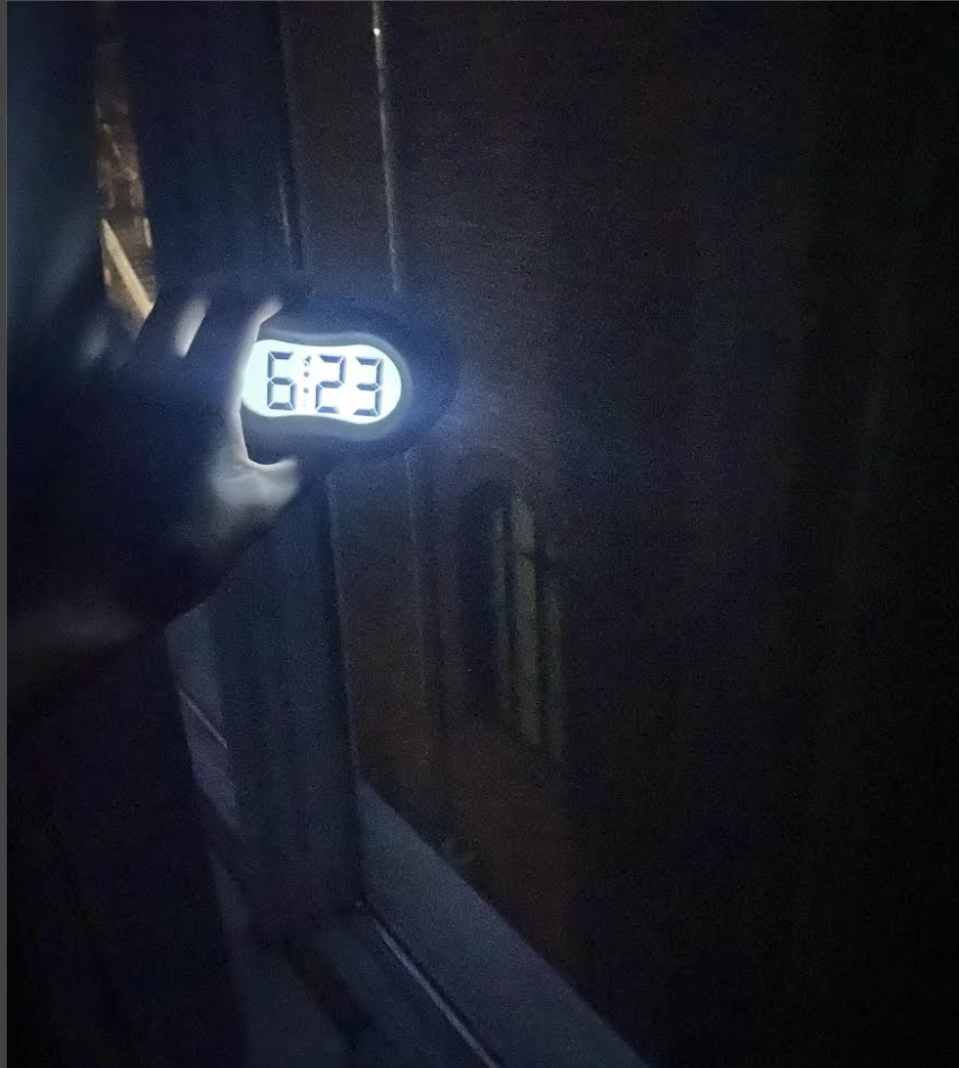
The clock on stage was a perfect touch. It kept a constant tension, ticking down toward a truth we already knew was coming, and every conversation toward the end felt urgent. The bright, pristine office and dinner setup contrasted so sharply with the chaos in the characters’ lives, it made it all more intriguing.
We still read this story because its themes —fate and human flaw—are just as relevant now as they were 2,500 years ago. Seeing it live on Broadway was a real privilege. The actors were captivating, and the way the story wove together made it unforgettable.
Copy Editor, Isabelle Chow
Knowing that we were going to watch Oedipus on Broadway, I was nervous because I wasn’t sure how they would adapt a story that included incest and patricide in a modern way. However, the writing and performances were beyond incredible, maintaining the timeless themes of power and fate from the original classic while also adding emotional depth with scenes like the family dinner where audiences could see the playful family dynamic.
Most of all, I loved the acting from the cast, everyone embodied their characters well which immersed me into the world. The contrast from the dinner to the final scene with the family where Oedipus violently tosses his children aside after learning that they shared the same mother as him made it especially heartbreaking.
I watched Back to the Future over winter break which is a sci-fi 80’s movie about a teenager who goes back in time, accidentally messes up his parent’s meet-cute, and must ensure that his parents fall in love, but the twist is that his mother falls in love with him. Turns out, there are modern stories that follow a similar trajectory to Oedipus.
In the background, there is a timer featured that counts down to the results of the election and the end of the play. This clever detail further contributes to the timelessness and realism of Oedipus. Overall, I really enjoyed watching the modern adaptation.
Ledes Editor, Susmita Paul
If I had to rate the Broadway adaptation of Oedipus out of 10, it would score 10 out of 10. Starting with Oedipus’s introduction as a politician to the very end where Jocasta commits suicide by shooting herself with a modern pistol, Robert Icke and his team did an excellent job at adapting the 2500 year old story to modern day whilst maintaining the integrity of the original plot.
One thing that simply made sense was Jocasta sharing her trauma about her late-husband, Laius, with Oedipus. In the original play, the impact of Laius’ death was never explored, because Jocasta told the story of the accident as if it were any other event. However, in the adaptation, we see that Jocasta reveals that she was a victim of child marriage and pedophilia which elaborates as to why she was desensitized to Laius’ death.
Robert Icke and his team did a fantastic job from choosing the set to be a modern apartment to casting the best actors to play the characters. I’d 100% sit and watch the play again.