It’s a normal afternoon in November, a Baruchian is at home and scrolling through TikTok. A seemingly cute video pops up of a cute dog in a doorbell camera, and a man coming out to greet the dog. Then, all of the sudden, the dog takes out a watergun and blows the house down.
This was 12th grader Josh Gutner’s first experience seeing a sora AI video online.
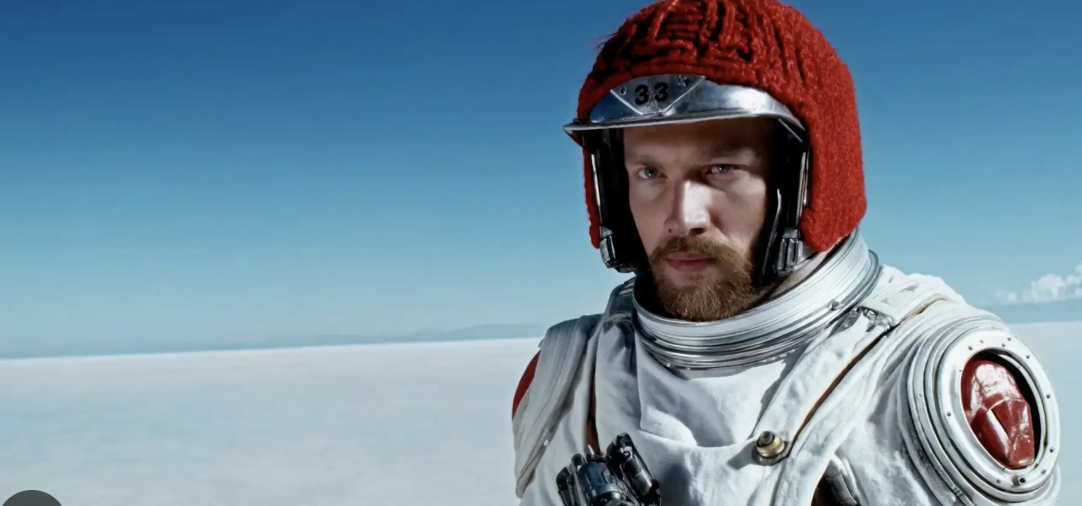
AI videos seem to have all the sudden become more realistic than ever, and appearing on our favorite platforms: Tiktok and Instagram. The sudden surge in the generation of these videos is largely due to the new platform, Sora AI.
Sora AI, currently Sora 2, is a content generation platform created by OpenAI. The platform allows users to generate videos based on prompts, and users can both generate videos and watch videos others have generated.
Initially, the app launched requiring an invite link for all. However, as of November 18th, Sora AI is free to access for users in the US, Canada, Japan, and South Korea without an invite code for a limited time.
Despite the requirement for an invite code, downloads have proliferated at a rapid pace. Tech.co, a website that has articles about tech and business, says that “According to OpenAI, Sora 2 has been downloaded over a million times in less than five days. This exceeds the milestone set by ChatGPT when it first launched.” There is no question that the platform is widely popular and desired for use.
The free access without an invite code is most likely to be cut short due to the enormous power and funding required to run Sora AI. Sources estimate that $15 million a day, or $5.4 billion a year is being spent to run the platform. This is due to Sora’s data processing being more complex than other engines such as GPT-5. Experts believe that the platform has to charge users in order for Sora to make revenue.
In line with Gutner’s first experience, the platform currently thrives off this entertaining, wacky content meant to amuse, engage, and even shock viewers with its unpredictability. Students have mixed feelings when seeing the content.
For some, they view the content as a source of creativity. When questioning if positives can come out of Sora, 11th grader Dane Morrisey said, “Yes, I do because I think we can make a lot of funny videos that don’t have to be harmful. … I think it expands creative thought because you can do almost anything you want on it, and create anything you want.”
On the contrary, there are strong feelings about the AI videos, such as dangers about the hyper realism some videos display. When asked about reactions when seeing Sora AI videos, 11th grader Alvin Wu said, “I fear that this may end up developing into fraud as people- as there is this popular video going on of the famous content creator Jake Paul doing makeup. And I fear with this kind of technology more people will be susceptible to scams and possibly fraud as anybody is allowed to do it. And they’ve also figured out how to remove the watermark which also is a cause of concern for most of these videos.”
The video of Jake Paul Wu mentioned, is one of the first viral hyper realistic videos that took over social media when Sora AI became accessible. The removal and cropping of the Sora watermark – that appears on the sides of the videos the platform generates – makes it extremely difficult to differentiate the Ai from real life.
There are sources online to help with people attempting to make the most realistic videos possible, explaining descriptive language as well as which video format will produce the best results. For instance, because there are so many doorbell and dashcam videos on the internet, AI is exceptionally good at making these very realistic.
With this realistic content generation, there have been multiple controversies that have arisen. The biggest include AI aggregating animation studios to demand Sora to stop using their content to teach the AI, and the generation of disrespectful videos involving deceased people.
Japanese content trade group CODA, whose most successful animation studio includes Studio Ghibli, told OpenAI to stop using their animations to help generate AI. Problems such as this of course pose questions about the future of animation, and how AI is starting to be able to generate animations for people extremely efficiently.
A second controversy Sora AI has been under fire for is the allowance of content to be generated of people being hurt and disrespectful content of deceased people. After a request from his estate, videos of Martin Luther King Jr. were stopped due to the mass of disrespectful content made for humor.
Gutner is concerned about this distribution of offensive and disrespectful his experience seeing disrespectful videos, he said, “Yeah I’ve seen a lot of dead people slash people dying, people breaking bones in their bodies, and even property being destroyed, which is all very interesting to see.”
There is a debate about who is responsible for the regulation of this kind of content generation, as there are questions of what people have the freedom to do. Culture and media in society today seems to sway the response. “In some ways, but I feel like people have the freedom to make stuff. I feel like if you can see people die in video games, or, die in movies, what’s the real difference? That’s my opinion. I feel like they’re not too liable,” Gutner said.
This disrespectful, humorous content is what Sora AI is currently known for the most upon social media platforms TikTok, Instagram and Youtube Shorts. When will it evolve into something everyone starts to see? With the exponential growth of this technology, the future is unpredictable.