At Baruch, new students don’t just show up in September. Oftentimes, students may transfer in and out of Baruch at a random point in the year. This made me wonder: Why do so many NYC students end up transferring — and why do so many land at Baruch?
Meeting new students is always interesting, but the more I paid attention, the more I realized this isn’t just a ‘Baruch’ thing — it’s an NYC thing. While working on my college application, I found myself reflecting on the pattern. Why did I transfer? Why did so many of my friends? And why does switching schools feel almost expected here?
A relative once pointed out a difference that lingered. In many high schools outside the city, students meet their classmates freshman year and graduate alongside the same peers four years later. In New York City, however, transferring is normalized. Students transfer for academic rigor, safety concerns, access to opportunity — or simply because their original school was not the right fit.
So I decided to ask Baruch transfers themselves what brought them here — and what their experiences reveal about the bigger story of public education in New York City.
What The Transfers Say:
For many, the decision to transfer was rooted in academics.
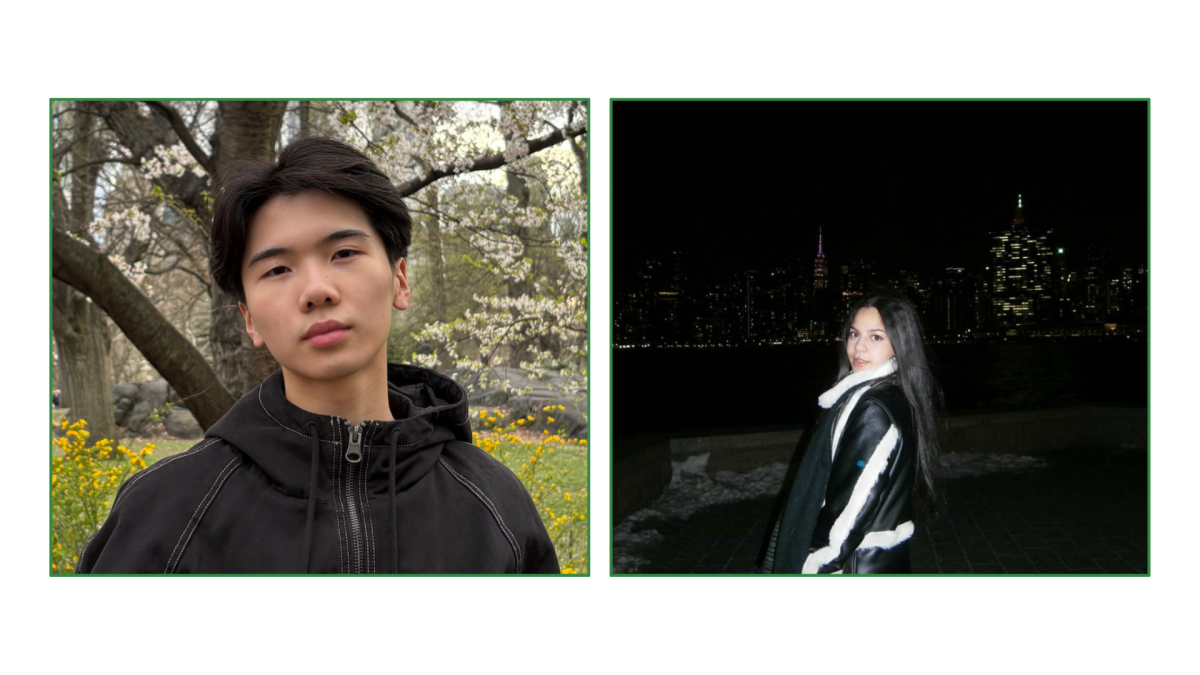
Paige Klapper, a now senior who transferred her sophomore year, said her motivation stemmed from a desire for structure and challenge after attending a virtual and hybrid school.
“After having attended a virtual and hybrid school, I wanted a more “normal” high school experience where I’d have the opportunity to meet more peers, partake in clubs, take AP classes, and just be more involved with my school community,” Klapper said.
She added that Baruch’s academic reputation played a major role in her decision.
“I also wanted a more rigorous workload and knew Baruch to be a pretty academically competitive school, so I felt like it would overall be a better fit,” she said.
That search for rigor echoed across interviews. Etienne Booth, another senior who transferred his sophomore year summarized his experience candidly.
“The caliber of work at my previous school did not academically match my needs,” Booth said.
Transfer students consistently described Baruch as a place where expectations are clearly defined, demanding and match their needs.
“Academically, Baruch feels much more rigorous compared to my previous school, with much higher expectations placed on students,” said Ewing Lam, a senior. “Baruch ensures students manage a multitude of assignments across different classes which require strong organizational skills and consistent attendance.”
Lam said the structure extends beyond coursework. “Teachers are generally very efficient in preparing students not only for exams, but also for learning and problem solving in the world outside of school,” he said.
Lam also said Baruch’s smaller size has made a significant impact on his experience.
“Socially, Baruch feels different because of its smaller student population and closer community compared to many other NYC schools,” he said. “This environment has made it easier to build meaningful relationships and develop closer bonds with both teachers and classmates.”
For Roger Chen, a senior, the decision to leave his previous school was deeply tied to identity.
“The biggest motivation would be understanding my limited future if I continue to stay in an art high school,” Chen said. “I really like art, and since I was young I have been thinking about pursuing art for my whole life. But until I really attended an art school, I realized how different it is.”
Chen said he often felt disconnected from the environment and began questioning his passion.
“I often find myself not fitting into the school environment and question my passion for art as time goes on,” he said.
Baruch, for Chen, instead offered balance. “I chose Baruch because of its smaller community and better diversity,” Chen said. “I specifically researched teachers and some classes given by Baruch.”
Academically, Chen said the transition was intense but necessary.
“Baruch definitely challenged me more academically,” he said. “The classes are more advanced and homework tends to be a lot more.”
Unlike his previous school, Chen said he now spends time in office hours, seeking academic support he had not prioritized before.
Socially, Chen noted both similarities and contrasts.
“The communities are very supportive and positive overall,” he said. “However, one difference is the interaction between different grade levels.”
At his former high school, mixed-grade classes allowed younger students to lean on upperclassmen. At Baruch, Chen said that interaction often happens through electives and mentorship-style electives.
What Does This Mean?
The shift in school culture reflects a larger truth about New York City education: choices allow for mobility. With hundreds of specialized and screened schools, students are encouraged — implicitly or explicitly — to find a better or even perfect fit. But a “perfect fit” is not always clear at 14 years old.
For Baruch, this constant flow of pivoting and transferring has shaped its identity. The school is not just a destination but rather it is a second chance and a place where students arrive carrying stories from elsewhere. As a result, a sort of melting point occurs where students bring experiences from unique places that allow the community to evolve as a whole.
In a city based upon reinvention and pursuing your dreams permanence is rare and adaptation is essential. Movement is apart of our culture. And at Baruch, that remains true — one new student at a time.