After a few years of using Madison Square Park as a means to an end—whether it’s by commuting or going to lunch—it becomes less of a historical landmark and rather mundane.
However, many Baruchians may be unaware of the vibrant Black History surrounding our backyard.
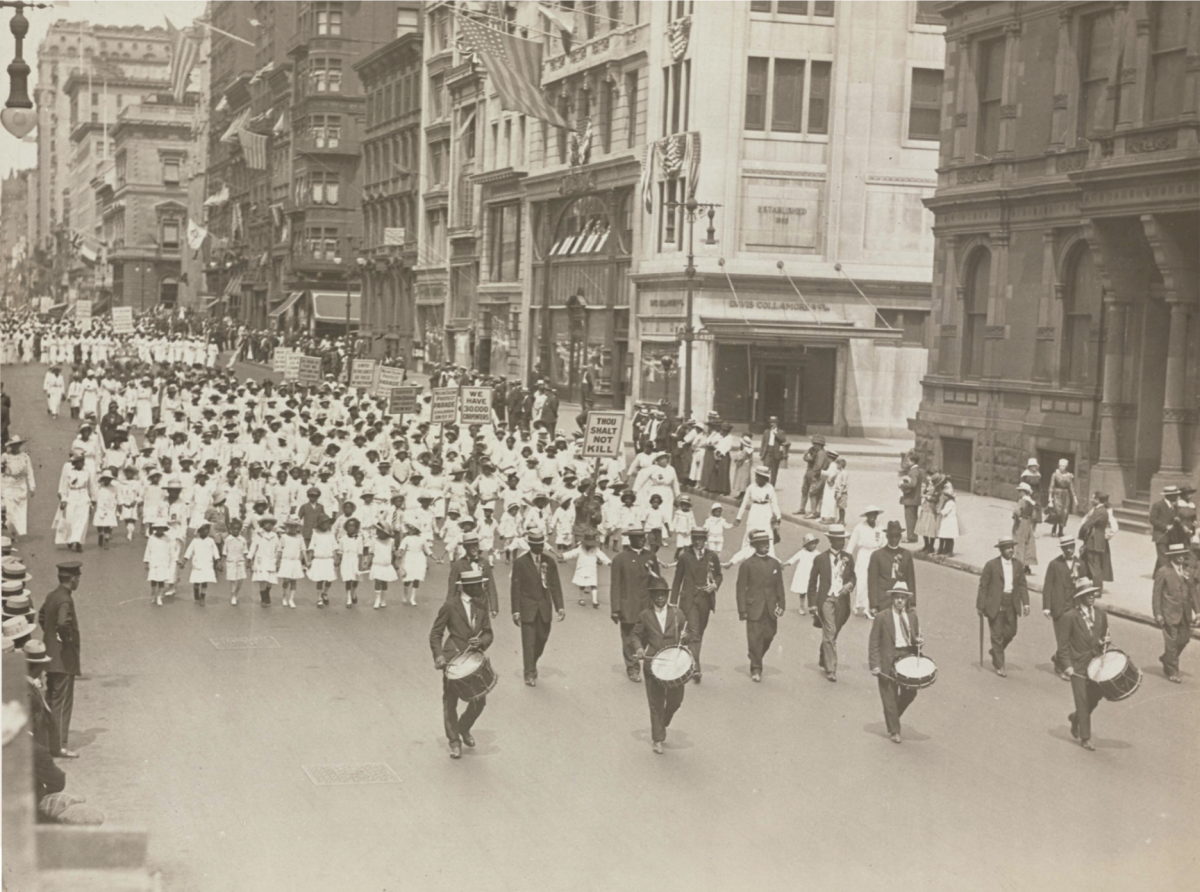
Madison Square Park is often regarded as a must see for tourism but it is an often overlooked landmark of Black history. On July 28th, 1917 approximately 10,000 African-Americans marched down Fifth Avenue—in silence to protest racial violence and white supremacy in the United States.
The event is known as the Silent Protest Parade. At the time, New York City was one of the first major mass demonstrations by African Americans. The idea for the protest was born from James Weldon Johnson, who worked for the NAACP, alongside church and community leaders.
The protest parade started at 55th–59th street and spanned down to Madison Square. Participants carried banners condemning violence and racial discrimination. They shed light on the rampant hate that plagued the nation and particularly shed light on episodes of mass anti-Black violence in the city of St. Louis, where 50-200 African Americans were murdered and 6,000 were left homeless by arson. The marchers indicted the U.S. and President Woodrow Wilson—who had just pledged to make the world safe for democracy.
The march’s silence was what gave it such impact. The only “sounds” in the streets were the powerful messages written on their signs and the rhythm of footsteps, not chants or speeches. By choosing silence, the organizers compelled crowds to face the gravity of the injustice.
The Silent Parade was a crucial and influential aspect of the civil rights movement and yet is not as known as famous marches on Selma or Washington.
[su_youtube_advanced url=”https://www.youtube.com/watch?v=vcU_no9_6L0″ width=”540″ height=”360″ loop=”yes” rel=”no” fs=”no”]
In a city where history is constantly being written and can be found in any street corner, it is important to celebrate and amplify the seemingly smaller parts of a larger movement.
It’s easy to believe that this history was much long ago and dismiss its relevance. However, it is not as distant as it may seem.
The same streets Baruch students walk every day were once the site of a major movement against racial violence and discrimination in the United States. It is in part because of those brave participants that we all benefit from the diversity of the city and Baruch.
Madison Square Park is more than a place to pass through to get to school or go to lunch. It is also a location tied to an important moment in Black history that unfolded just a few feet from Baruch.
Learning about the 1917 silent protest parade and the role of trail blazers such as James Weldon Johnson helps bring greater awareness to the history embedded in familiar spaces. And by gaining this awareness history becomes more real, more tangible and has real life applications.
It challenges us to consider what course of action we may choose if dealing with injustice in our own time. Would we stay silent out of comfort—or stand together to demand change? By simply asking yourself and others this question may lead to better understanding of our responsibility in the present.
It is important to internalize history and take the time to truly understand it. By knowing even the seemingly small moments you may be prepared to think and act in the future.
Students and faculty alike can better understand how past movements for justice connect to present conversations about equity and engagement.
Awareness of local history is a simple but meaningful step toward preserving the heroic people and movements that shaped the city we live and learn in today.