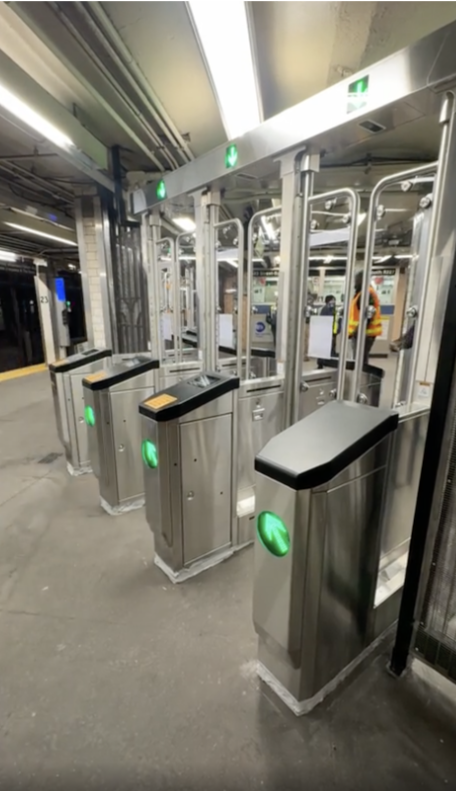
The infamous turnstiles have been installed at the Uptown 23rd St- Baruch College Station on the six line. This new change has sparked a variety of opinions and reactions here at Baruch as students pass by the entrance everyday.
On January 22, the Metropolitan Transportation Authority–known as the MTA– installed these fresh new turnstiles on our beloved train station: 23rd St-Baruch College. This update has traveled throughout various train stations throughout the city.
This was an effort by the MTA as a way to modernize the entrance and to prevent fare evasion. For students who rely on the six line, the turnstiles have become a noticeable part of their routines–whether they like it or not. But the question is: are the turnstiles winning against the fare evaders or is NYC still undefeated?
While this new system was created to improve efficiency and prevent evasion, students here at Baruch have mixed opinions as to whether they are helpful or not.
Data from the MTA, show new gates were designed to increase accessibility and speed up exit or entry times. These gates were to help out people with wheelchairs or strollers as well as preventing fare evaders by placing sensors.
However, the city had different reactions to these as some believe they were very helpful, while others believed it slowed their routine down and some have even questioned whether the money could have been better spent improving other parts of the train station or improving train delays. The MTA focused on something that wasn’t really necessary.
What NYC really needs is getting to places on time, especially for students and the employed. The experiences of our Baruchians truly shows what the MTA should focus on instead.
Tiffany Bravo, an 11th grader who takes the six train to school, had a pretty positive impression of the new turnstiles. “I thought the turnstiles were pretty cool to use,” Bravo said.
No matter how cool she thinks it is she also acknowledges that they have some drawbacks once she gets used to them. “I think they work fine, they’re just slow sometimes. I would have to wait for the person before me to leave before I do,”Bravo said.
The more she uses them, the more downsides she sees. “Sometimes the sensors get annoying and won’t open, causing me to miss my train,” Bravo said. Even these small delays within the doors can mean missing the train, which is infuriating especially because the next train comes in 10 minutes. Who has 10 minutes to spare?
Besides the negative sides of the gate system, it does come with some positive sides as well. People also say there is no difference between the traditional gates and the modern ones.
According to the data presented by THE CITY, the MTA created a design with taller barrier doors, narrower gaps and sensors to make it more difficult for fare evaders to do what they’re good at.
Even so, viral videos on the internet have shown that fare evaders still found a way to evade these fares. This raises the question of if the MTA made a smart choice by spending money on a problem where people can find ways around it. Regardless of the public’s concerns, not all students experience the downsides of the turnstiles.
Unlike Bravo, Junior Angy Angamarca’s first impression was confusion. “My first reaction was that it was a weird change to the train station,” Angamarca said.
Angamarca does however agree with Bravo, as she got used to the new turnsiles as she used them more frequently. “They weren’t confusing to use, they were straightforward and clear,” she said, “I believe this new update to the station is better than the old one because it’s easier to walk through as you tap and go.”
Despite Angamarca’s experience, she still questioned if this new update was a good idea for the mta to accomplish their goal. “I don’t believe these turnstiles will prevent fare evasion because there are many people who will find ways to get through without paying,” she said.
Angamarca believes there are bigger problems affecting student commuters. “I believe rush hour does affect the travel time of many students because there are so many people attempting to fit in a packed train,” she said. “There should be more control within the delays of trains as it affects mine and other student’s travel time.”
As the MTA plans to install these turnstiles in more stations by 2029, Baruch students stay divided on whether the changes truly help the city. For now, the scoreboard remains uncertain. Turnstiles – 1 Students – maybe 1.
Knowing NYC, the real winner might be whoever catches their train before the doors close–and before everyone on the train watches it happen and leaves you in defeat.