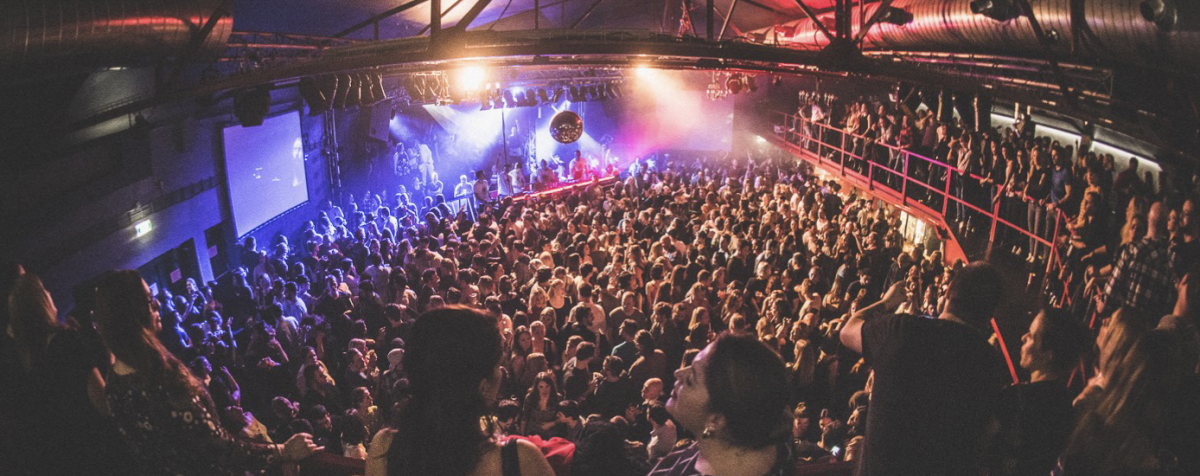
The moment the lights dim and the crowd starts to rumble, teenagers around the world hush and brace themselves for the moment they’ve been waiting for.
Some scream every lyric from the first line, some dance all night and others sway back and forth admiring the artist they know will take a bow too soon. No matter the reaction, concerts are an essential part of teenage life. This culture doesn’t look the same everywhere, though.
Live music looks different depending on where you reside. Access, safety, cost and public transportation all shape whether concerts feel like a casual weekend plan or a rare treat. To understand how teen concert culture varies across countries, I spoke with teenagers ages 16 to 18 from Spain, Luxembourg, South Africa and the United States.
Our conversations revealed that concerts aren’t just about music. They reflect how young people are allowed to move through their teenage years and how much freedom they’re given along the way.
For Camille Maujean, 17, concerts are simply part of growing up in Barcelona. “Barcelona is a very big city, so there are a lot of artists, especially Spanish ones, who come here,” she said. Because of the city’s size and constant flow of performers, concerts feel accessible rather than exclusive.
Most teens, Maujean explained, attend shows featuring local or Spanish-speaking artists. “I would say Spanish singers, or hip-hop and pop,” she said. Artists like Bad Bunny draw massive outdoor crowds, while smaller venues host upcoming European performers.
When asked how old she was when she attended her first concert, Maujean said: “Honestly, from 11 or 12 years old, it’s very normalized.”
She also noted that concerts are rarely a solo experience. Barcelona teens usually go with friends, meet up with classmates and spend the next day sharing photos and videos from the night before. For Maujean, concerts are about entertainment, spending time with friends, and showing support for her favorite artists.
Parents in Barcelona are supportive, too. “They think it’s cool,” she said, “unless it’s really expensive.”
Two hours away from Camille Meaujean in Spain, is Summer Dowling in Luxembourg. She emphasized that concerts are tied directly to nightlife. When asked how popular concerts are, Downling, 18, immediately associated them with the country’s low drinking age. “The drinking age is 16, so concerts are really big here,” she said. “It’s definitely a club scene – you go out drinking, go
out partying, and go to concerts”
The music reflects Luxembourg’s diverse population. Hip-hop, grime, Portuguese artists, and French rap dominate the scene. Teens start attending concerts young, but Dowling said the crowd skews older. “You’ll see 12-year-olds, but mostly it’s 14 to 20.”
Crowd behavior in Luxembourg tends to be more reserved. “People don’t really belt out lyrics,” Dowling said. “They just want to hear music they haven’t heard before.” Outfits reflect the nightlife influence as well. “Jeans and a going-out top,” she said, describing a look that blends concert outfits and club attire.
Parents are never concerned. “Luxembourg is the wealthiest nation in the world and it’s really safe,” Summer said. “You can get home really easily, because public transportation is free.”
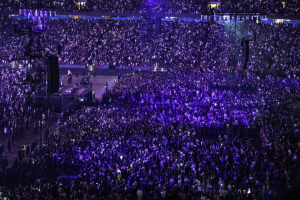
Concert costs are also not an issue whatsoever. “Parents pay like 98% of the time, but one of the biggest events of the year is a free, government-funded outdoor concert celebrating the Duke’s birthday.” She said, “We get to see really famous artists…for free”. Still, concerts in Luxembourg remain more about entertainment than personal identity.
On the other hand, in Washington D.C., concerts are frequent, and “just being there” means everything. “If there’s any concert in my city, there’s gonna be at least ten kids I know there,” said Amaya Troconis, 17. Rap and underground music dominates the kids and the concerts, and teens often start going to concerts around 12 or 13. But in D.C., it’s not just about being in the room – it’s about being seen.
Troconis says concerts in DC are indoors and the energy is nonstop throughout the night. “Everyone’s singing along and screaming,” Troconis said. But the real goal is the front or barricade. “You want to be front row, you need to be front row,” she said. “That’s the whole point.” Being close enough to see an artist’s expressions, make eye contact, or get a lyric sung directly at you turns the concert into a personal milestone. The “best moment of Troconis’ life” was when SZA waved to her in the crowd (she was front row, of course).
For many DC teens, that face-to-face interaction is what makes the brutal push to the front worth it. Artists often reach into the crowd, point out fans, or even crowd surf. “If they look at you, or say something to you, you remember that forever,” Troconis said. Being at the front also means better videos, but the interaction matters more than the footage. “It feels real,” she added. “Like they’re performing for you.”

Parents of teens in DC are generally supportive, though more cautious when it comes to floor tickets and crowded pits. “They just want to make sure I have someone with me,” Troconis said.
In South Africa, concerts feel special not because of your view of the artist, but because they’re rare. “Most major artists don’t come,” said Sydney Gilreath, 17. When they do, “almost everyone I know goes.” Local genres like amapiano and house music dominate small shows, but international artists like Gunna and Travis Scott draw enormous crowds. Gilreath notes that “People dance a lot more,” describing an atmosphere that feels more communal than performative.
Parents, however, tend to be more cautious. “Crime is definitely something teens have to worry about,” Gilreath said. Getting to and from venues safely is a bigger concern and it affects how often Johannesburg teens are allowed to go out.
No matter the continent, teens transform concerts into more than a listening experience. These events become symbols of freedom, belonging, and the rhythm and happiness of growing up.