When asking someone about what’s on their playlist, you’ll be met with more than song titles or a brief impression of their music taste—you’ll be met with stories.
Like a diary in disguise, playlists hold a mix of lived experiences, memories, and emotions. Studies reveal that several factors take part in forming our music preferences. Psychologists have concluded that these preferences are capable of reflecting who we are, when and where we grew up, and what time of day we typically press play.
David Silbersweig, Professor of Psychiatry at Harvard Medical School says that as humans, “We seem to be very much tuned for music.”
From the hippocampus to the amygdala, the entirety of our limbic system plays a role in shaping our preferences. More specifically, music preferences are formed through the emotional response our brains generate when we hear different melodies, rhythms, and lyrics.
Beyond brain chemistry, factors like age and changes in environment influence how our music taste evolves. Research shows that the bulk of our long-term musical preferences take shape during adolescence. With that in mind, what stories are tucked inside the playlists of Baruchians?
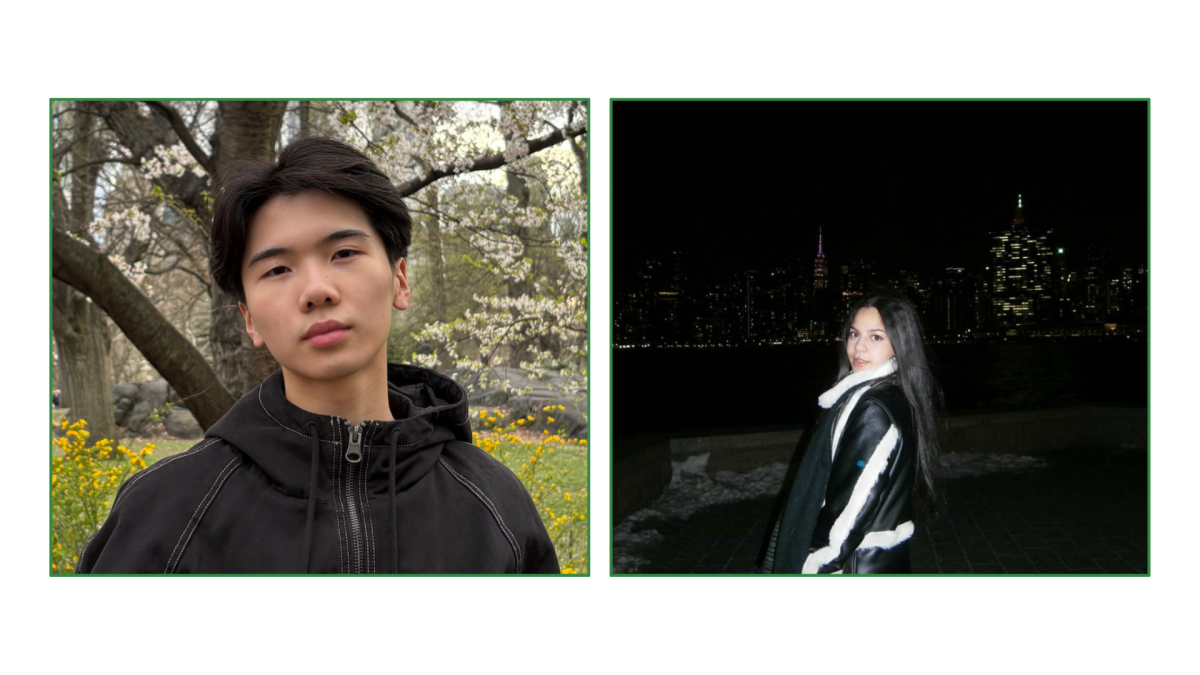
For 12th grader Brissia Sanchez Bolaños, music is a constant. As someone who listens to music nearly every hour of the day, she said she has noticed a definite change in her music taste over the years.
“When I was younger I listened to the beat instead of lyrics,” she said. “Now I like to pay attention to the lyrics and meanings of songs. I’ve also opened up to more genres. I only used to listen to music my parents played throughout the house, but eventually I discovered my own favorite genres.”
Currently, her music taste spans across various forms of rock, R&B, and pop. Her favorite band is Tigers Jaw, which she describes as “some kind of alternative rock.”
Much of her playlists, Bolaños explained, are inseparable from her memories. She often reminisces on how her upbringing in Brooklyn impacted her music taste: “The area where I grew up had plenty of reggae playing which led me to listen to that genre.”
Music she was introduced to from her Hispanic household also laid a vital foundation for her music taste, foreshadowing her current enjoyment of Spanish rock.
Shifting schools also played a rather significant role in shaping her taste. She described how in early eighth grade through the end of freshman year, she almost exclusively listened to rap—from early 90s classics to SoundCloud artists. Her transfer to Baruch marked a rather drastic change: “When I changed schools mid sophomore year I had some kind of change, I was getting more distant from my friends who were all interested in K-music,” she explained. “In Baruch, I started listening to more R&B and pop.”
Bolaños’ playlist reads like a timeline, reflecting key turning points in her life. While her musical preferences are tied to her environment and memories, Rutvi Talsaniya bases her listening on mood, weather, and emotion(s) evoked.
“I listen to music about, like, more than half of my day,” Talsaniya said. She doesn’t claim a favorite artist, indulging in jazz, pop, hip hop, and artists like Chet Baker, Frank Sinatra, Amy Winehouse, and Hozier.
Her listening habits are emotionally intuitive, as she finds herself choosing songs that mirror her feelings. On gloomy days, she tends to listen to more classical instrumental music.
Interestingly, Talsaniya believes her music taste wasn’t necessarily affected by changes in environment. Despite having moved from India earlier this year to attend school in the United States, she believes “..external factors like peers, classmates, haven’t really affected my music taste.”
Instead, her playlist grew as her personality did: “I think it’s more of a personal evolution that changed my music taste instead of completely based on my environment.”
Despite Talsaniya’s apparent autonomy when it comes to music, she’s open to recommendations. In fact, she prides herself on her ability to recommend songs that her friends end up loving. In terms of being on the receiving end of recommendations, she admits she’s a lot more selective. “I like to listen to people’s music, but I wouldn’t necessarily, like, add it to my own playlist.”
For 11th-grader Calvin Neill, music is woven into his daily routine. “It’s one of the first things I do in the morning,” he said. “After I brush my teeth, I put my AirPods in.” Though he can no longer listen to music during school hours due to the statewide cellphone ban, he plays music on his commute to and from school, while doing homework, and as background noise throughout the afternoon.
His listening shifts depending on the moment, but the core of his music taste is unmistakable: ”My favorite genre now is definitely German rap. It’s about 80% of what I listen to.”
Having spent ten months living in Germany, exposure to the country’s music scene only deepened his connection to it. Neill’s current favorite artist is Ayman, a German artist whose music spans across the genres of hip-hop, rap, and trap.
“I focus mostly on the melody and the way music makes me feel,” Neill said.
Even though he speaks German, he admits that the fast-paced nature of German rap can be hard to fully understand. Lyrics, to him, have little to do with forming his music taste. His interest in Spanish music despite not being able to understand it, proves this.
The songs he chooses to listen to aren’t necessarily driven by childhood influences either. In fact, he jokingly refers to his younger taste as “horrible,” having been rooted in the pop music his older brother listened to. Instead, his taste began to take shape at the start of high school—prior to his transfer to Baruch—where he was surrounded by a culturally diverse group of friends.
His environment outside school also played a role. He described evenings at home as another source of discovery: “At dinner, my dad’s always playing music and I enjoy a lot of whatever he’s listening to.” The music he listens to reflects his friendships and lived experiences.
Whether shaped by childhood memories, cultural roots, or shifts in environment, each Baruchians’ playlist holds far more than just a mere list of songs— it holds fragments of who they are, curating a unique soundtrack for their life.