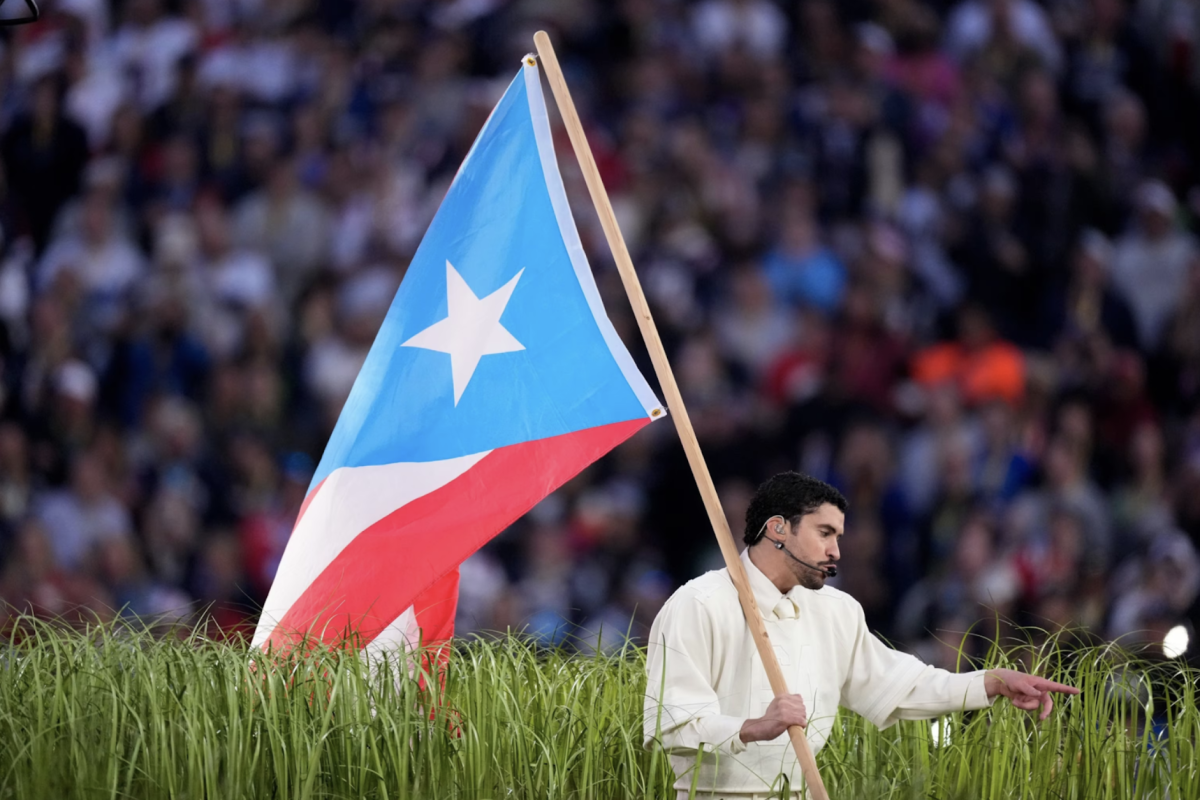
On Feb. eighth, 2026, Puerto Rican star Bad Bunny made history as the headliner of the Apple Music Super Bowl LX Halftime Show at Levi’s Stadium in Santa Clara, California. He became the first Latino solo artist to headline the show and the first to perform primarily in Spanish at one of the most-watched sporting events in the United States.
Beyond a Performance
Bad Bunny’s show wasn’t merely about music—it was a celebration of Puerto Rican and Latin culture brought to millions of viewers. He opened with his hit “Tití Me Preguntó” on a stage designed to resemble a Puerto Rican sugar cane field, a nod to the island’s history and culture.
The performance included songs such as “Yo Perreo Sola” and “El Apagón.” During “El Apagón,” stage props replicating power lines referenced Puerto Rico’s ongoing energy crisis.
The performance included small yet powerful references to everyday Latinx life, like a child sleeping on monobloc chairs—a common experience across the Caribbean and Latin America. He placed various stands throughout his set to represent the jobs many Latinos hold.
Beyond cultural representation, Bad Bunny also used the stage to support his community, bringing Toñita, owner of New York’s Caribbean Social Club in Williamsburg, and displaying her address on national television, ensuring the Puerto Rican landmark continues thriving.
Guest Stars and Surprise Moments
Whether they were guests of the famous Casita or there to perform, many artists joined Bad Bunny on stage including:
- Lady Gaga surprised the crowd with a special salsa-style rendition of her song “Die With a Smile.”
- Ricky Martin, a Puerto Rican legend, sang a verse of Bad Bunny’s “Lo Que Le Paso a Hawaii,” also making history as the first publicly gay man to perform in the Super Bowl.
- Actors and musicians like Pedro Pascal, Cardi B, and Jessica Alba also appeared on stage, dancing, celebrating, and most importantly, representing Latinx heritage.
- A memorable moment was when Bad Bunny gave a young boy a Grammy award prop on stage—a symbolic gesture about believing in your dreams. The boy and his family appeared to be watching Bad Bunny’s Grammy acceptance speech, emphasizing his message about Latino representation and treatment today.
Unity and Pride
Throughout the show, Bad Bunny emphasized joy, identity and unity. Proudly waving the Puerto Rican flag, he shouted “God Bless America,” and then said, “O sea…” as he proceeded to individually name almost every country in the western hemisphere. This act was followed by a number of his dancers running out with flags from across the Americas, ending his performance with his famous hit “DtMF.”
Bad Bunny’s show was seen as a heavily symbolic performance highlighting the importance of being united as a country, and that we are all the same regardless of what major institutions say.
Beyond the music and the spectacle, Bad Bunny’s halftime show carried a strong political message. By putting Puerto Rican culture front and center on a national stage, he highlighted the contributions of Latino communities, even as many face discrimination in the U.S. His performance celebrated Latinx heritage while also reminding viewers that these cultures are an essential part of American identity.